Two recent commercial upgrades show how the right amount of battery storage turns wasted export into real savings.
There’s a moment in the lifecycle of a solar installation when the conversation shifts. It moves on from generation — how much energy a system produces — to something more commercially interesting: what happens to that energy when no one is using it.
For many of our commercial clients, that moment is arriving now. For two of them recently, it led to a significant upgrade in battery storage capacity, and the results illustrate a pattern that’s becoming increasingly common across commercial solar sites.
When we installed 24kW of battery storage alongside a solar array at Green End Farm Shop in June 2025, the system performed well. But as generation data accumulated, a clear picture emerged: this site was exporting energy on at least 250 days of the year, while simultaneously drawing from the grid overnight to power refrigeration and other essential systems.
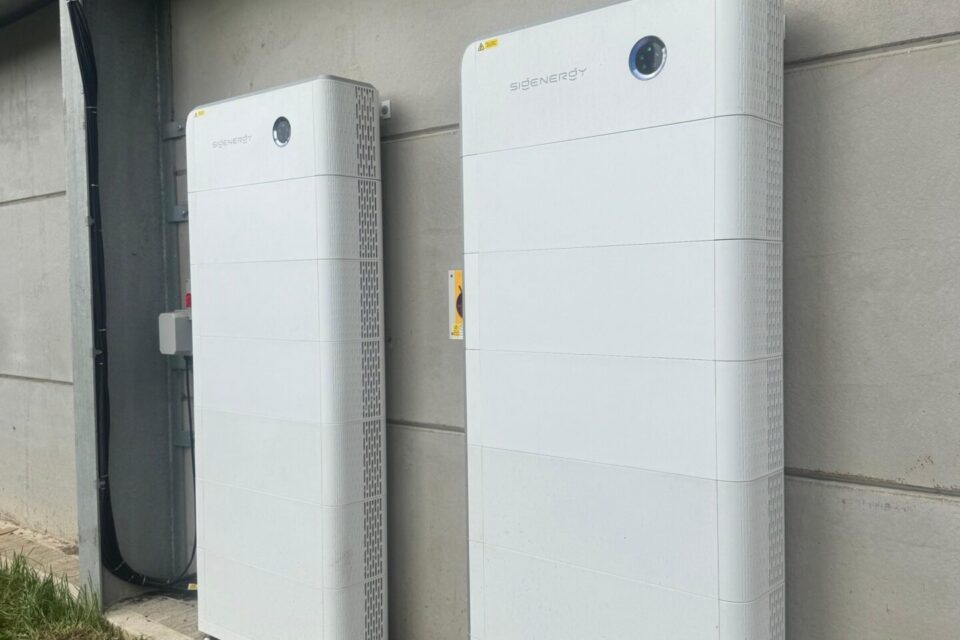
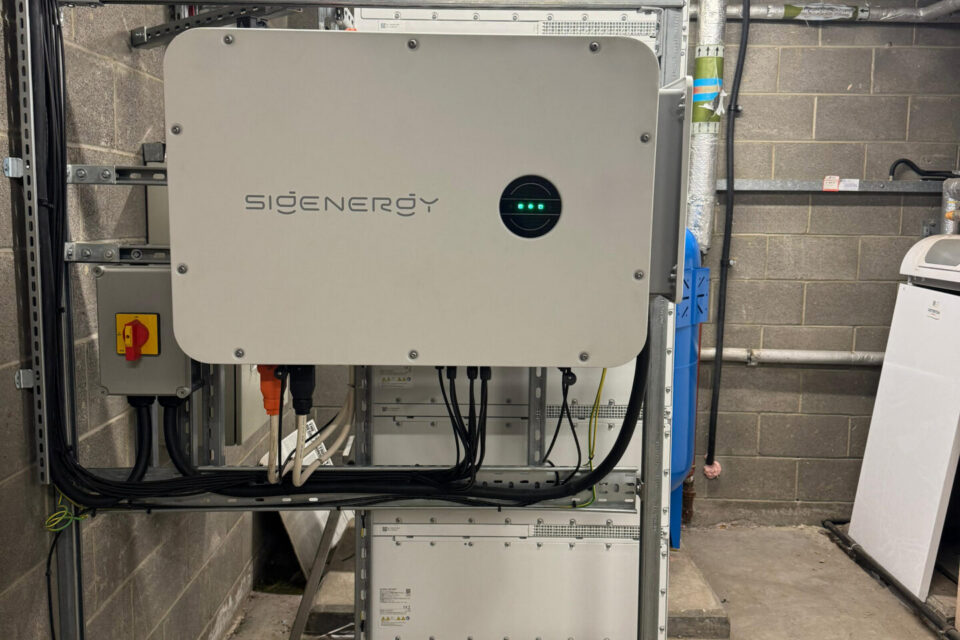
The logic of storing more of what was being generated, rather than exporting it at a lower rate and buying it back at a higher one, became increasingly difficult to ignore. We’ve now completed an additional 39kW Sigenergy installation, bringing total battery storage to 51kW. The projected return on investment is five years — a strong commercial case given current and forecast energy prices.
Bellmont House is a multi-occupancy commercial building with a solar installation that generates export on over 240 days of the year. The opportunity here was slightly different: the building’s tenants have significant evening energy demand, and that energy was being sourced from the grid rather than from generation that had occurred earlier in the day.
We’ve now installed 84kW of battery storage. As the stored energy is charged back to tenants, the investment has a dual commercial benefit — reducing grid dependency while also creating a revenue stream that materially improves the ROI on the battery system itself.
Both installations were carried out on the DC side, requiring no grid authorisation. That kept the process straightforward and quick for both sites.